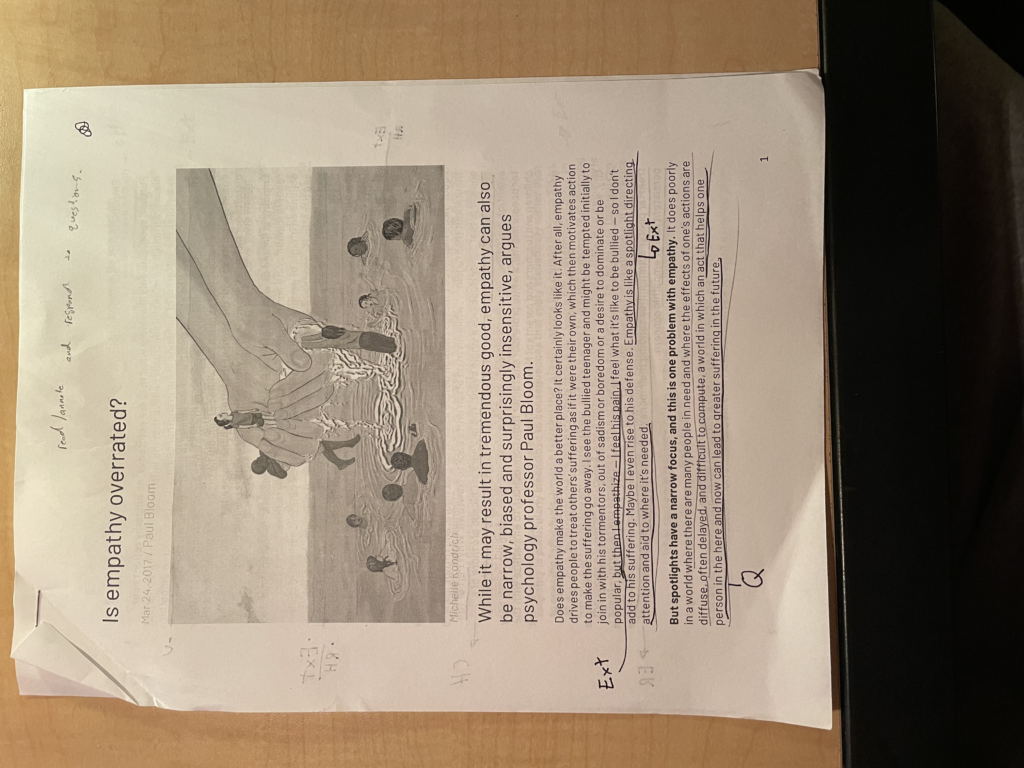
Paul Bloom’s essay challenges the common belief that empathy is always a positive in decision-making. He argues that empathy, defined as feeling what others feel, can be biased, narrow, and even harmful. Instead, Bloom suggests that rational compassion and moral reasoning should guide our actions rather than emotional empathy alone. Throughout the piece, he emphasizes that empathy can mislead us, causing favoritism and poor judgments. Bloom’s three main points include: Empathy is biased and selective, as he says that “Empathy is a spotlight that shines on some people and leaves others in darkness,” and that empathy can lead to poor decisions like “Empathy often causes us to focus on individuals rather than groups, which can distort our sense of justice.” Another point he brings up is the use of logic and values instead of just feelings when deciding what’s right. He expresses this when saying, “We should rely on reason and principles rather than empathy to make ethical choices.”
Bloom challenges my initial thoughts on empathy by showing that it’s not always the best guide for making moral choices. I used to think empathy was just good overall, but he points out that it can sometimes be overwhelming or just unfair. His idea of smart kindness, balancing kindness with reason, helps me see that being kind isn’t just about feelings but about using thought to make better decisions. This shifts my view from seeing empathy as the only way to connect with others to understanding that thoughtful kindness is often more important.
A strong claim from Bloom that sparked a strong response, “Empathy is a spotlight that shines on some people and leaves others in darkness.” This highlights how empathy can be unfair and partial. From my perspective, empathy can indeed be selective, it also serves as a tool for kindness. I think learning how to expand our empathy beyond just those Infront of us would be key.
A discussion question is “How can we express smart kindness when people mostly care about feelings and doing what’s right and not just what we feel?”
During my first college-level peer review experience, I found it to be quite like the peer review process in high school. When reviewing my classmates’ work, I noticed a difference in writing styles and approaches to their papers. It also made me realize that what I considered the standard writing was from my high school experience, where most of my former classmates wrote similarly because we had the same teacher. Now, in a classroom with students from different backgrounds and teachers, I see a variety of writing styles. This can benefit in learning other writing styles, but also when getting peer readback from someone with a different style, they’ll see things that I don’t, which I can use to improve my work.
This blends into one of my biggest bonuses is receiving feedback from classmates that helped me see my writing from a new perspective and see mistakes that I had grazed over. One piece of feedback I received was to give more of a background/story on the authors, and this made me realize I had grazed right over the fact that I forgot to do that, even though I thought I covered it when writing, but when going back to visit my paper, it stuck out to me.
One challenge I faced during the peer review session was balancing being honest with being constructive. I wanted to provide helpful feedback without overdoing it. It was sometimes difficult to find the right words to express mistakes kindly, but effectively, without having to write a paragraph on the side of the paper. Overall, this helped me to grow as both a writer and a reviewer, with the ability to go over someone else’s writing and see new styles, but also points that they had brought up that might have been left out of my own paper.
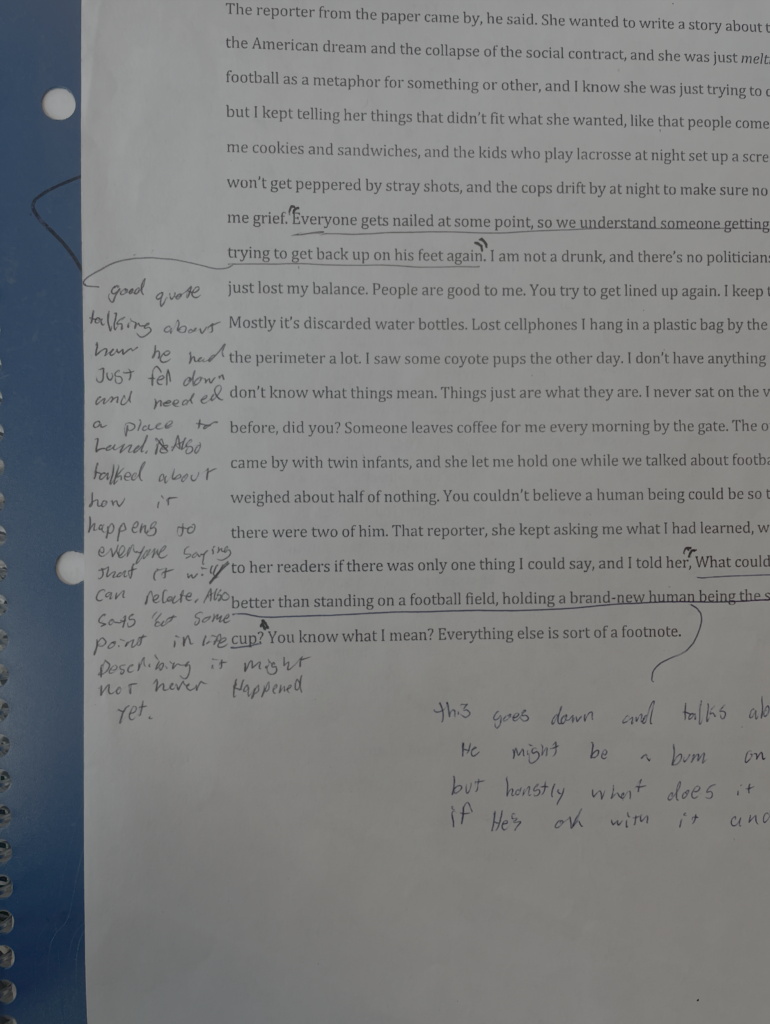
For my annotations over the first few weeks, my approach to annotation has changed dramatically. In the beginning, my annotations were unorganized and confusing, which made it difficult for me to go back to a text and use my notes in my writing.
For example, when I was annotating “The Hawk,” I tended to underline large sections of text and then draw a line out to a free corner of the page where I would scribble a quick sentence about what I thought was important. At first, this was fine, but when I attempted to reread the text later and it was unclear and took too long. The notes were scattered, and I often struggled to remember what I had originally meant. The lack of organization confused and slowed down the whole process of finding strong evidence or meaningful quotes when re-reading. In short terms, my method of annotation was not ideal.
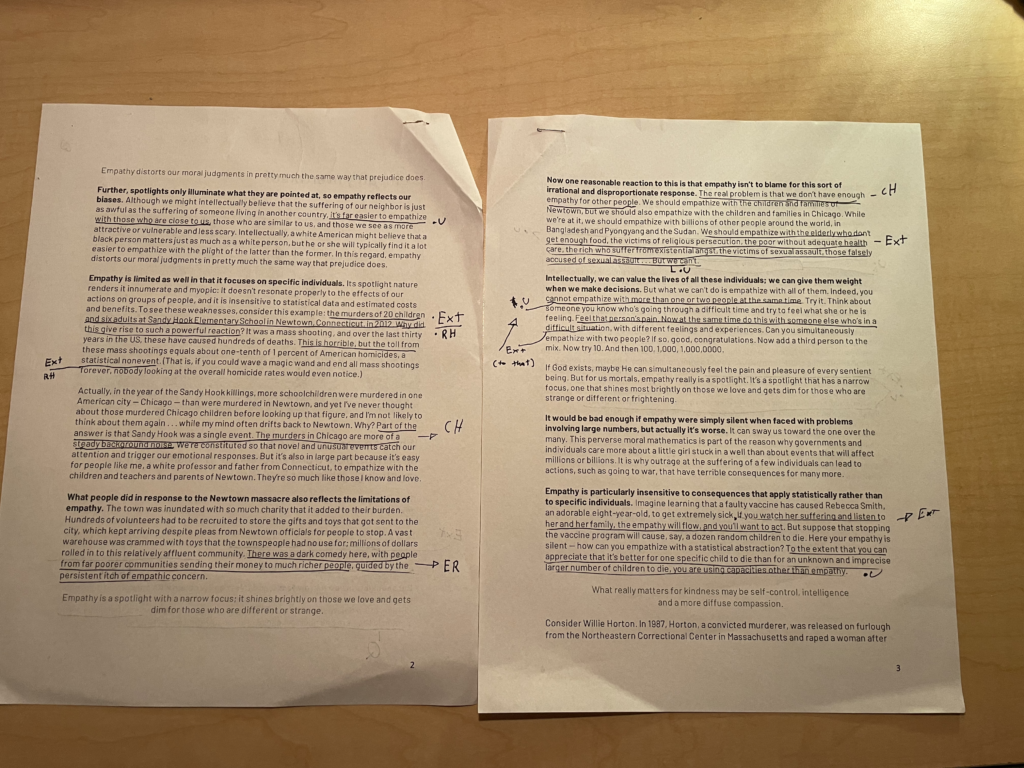
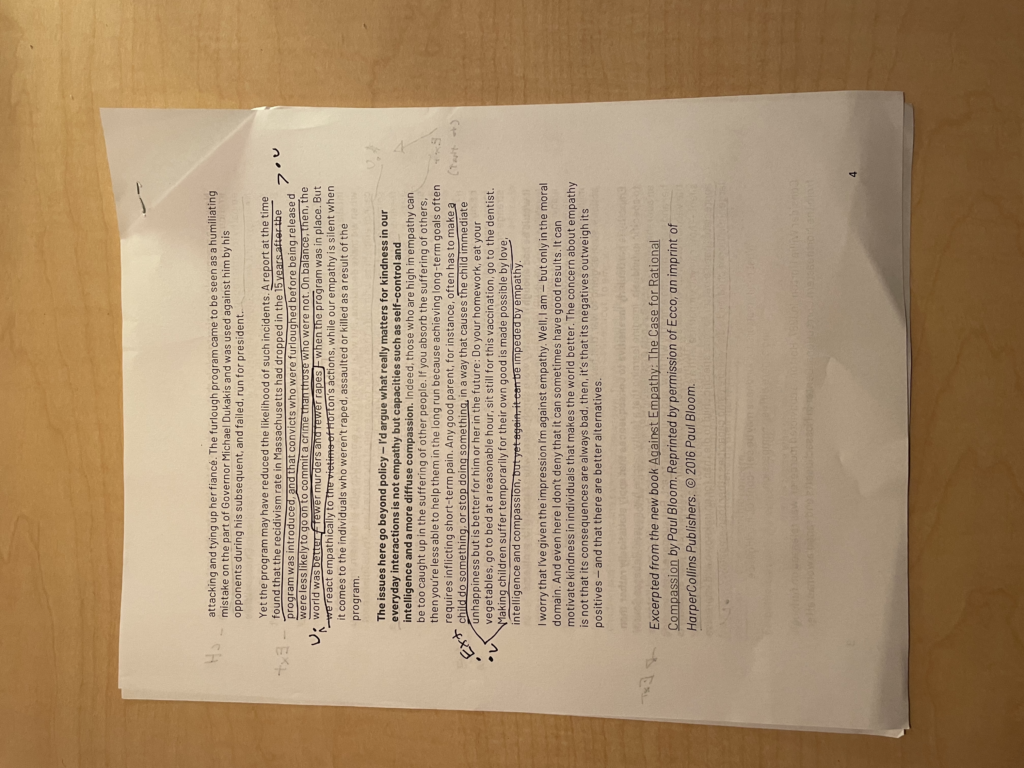
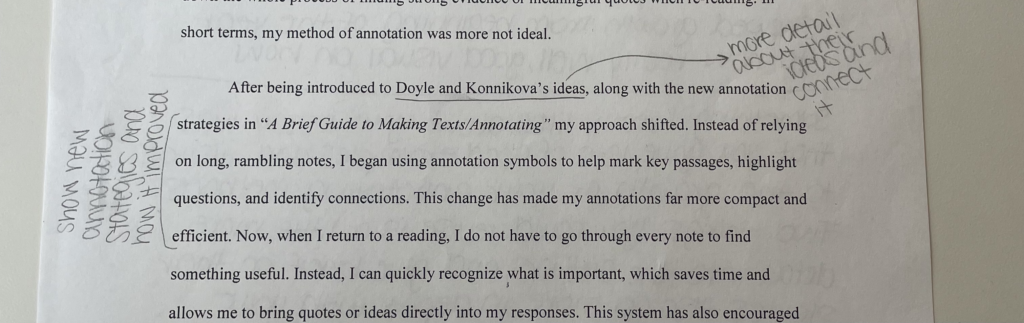
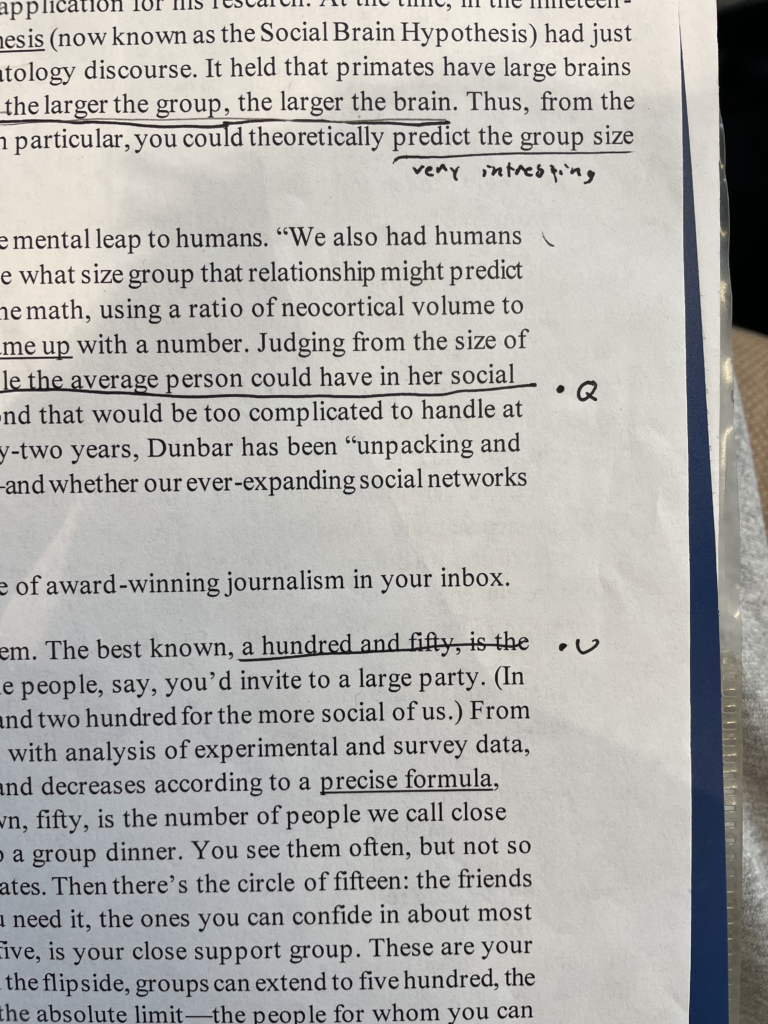
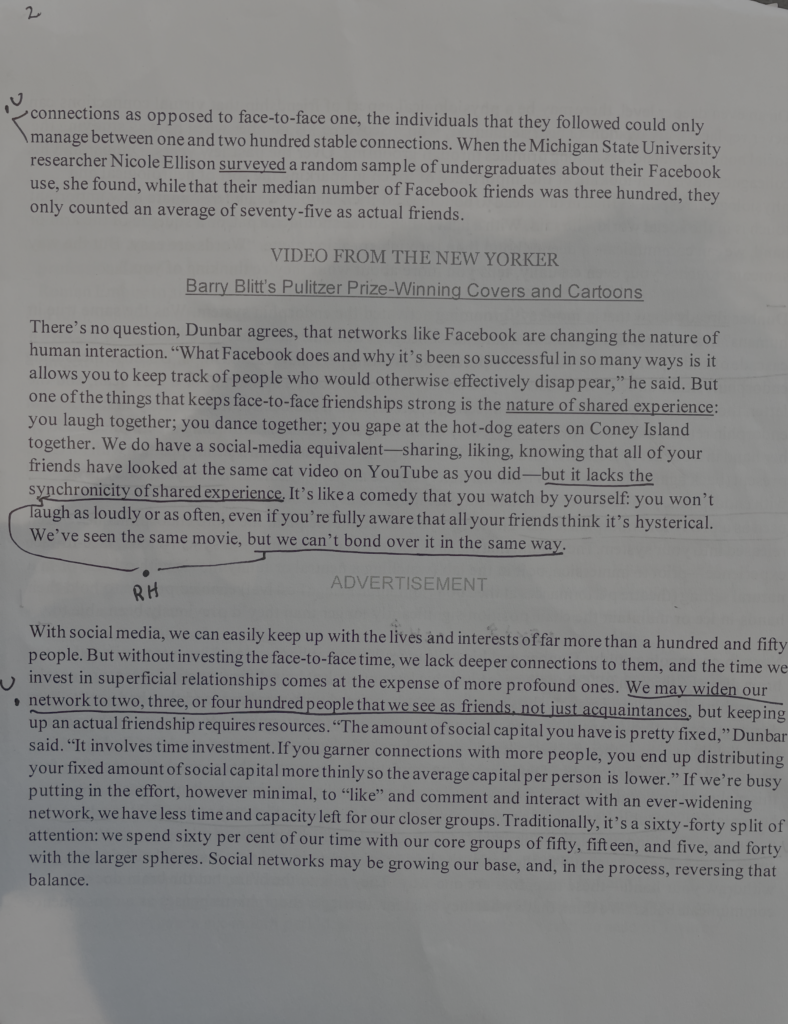
After being introduced to Doyle and Konnikova’s ideas, along with the new annotation strategies in “A Brief Guide to Making Texts/Annotating” my approach shifted. Instead of relying on long, rambling notes, I began using annotation symbols to help mark key passages, highlight questions, and identify connections. This change has made my annotations far more compact and efficient. Now, when I return to a reading, I do not have to go through every note to find something useful. Instead, I can quickly recognize what is important, which saves time and allows me to bring quotes or ideas directly into my responses.
As you can see, the paper looks clean and is not confusing to look at. This system has also encouraged me to preview texts differently. Rather than just going straight into the reading, I now skim for main themes or arguments first, which helps me frame my reading and connect my notes to larger conversations in my writing, rather than just summarizing the content.
Of course, there are still areas to improve. While symbols make my annotations faster and cleaner, they are not always perfect. Most of the time, I forget what certain symbols mean, or I realize later that just a letter does not give me enough context to fully understand my original thought. To improve, I need to find a balance between keeping annotations brief and adding just enough context to make them useful when I revisit a text.
Overall, I can already see how my annotation, previewing have improved over the past few weeks. With more practice and feedback, I can continue getting better at these methods to make my reading responses and essays stronger, clearer, and more connected to the larger conversations we are now dealing with.