Looking back to the very first reading response of “The Hawk,” I realized how short and confusing they were. It matters little sense through my paragraph, and you can tell me the size of the response and the choice of words that I wrote in one go and never looked back or re-read it. As you can see in the example below of my response to Q4 for The Hawk:

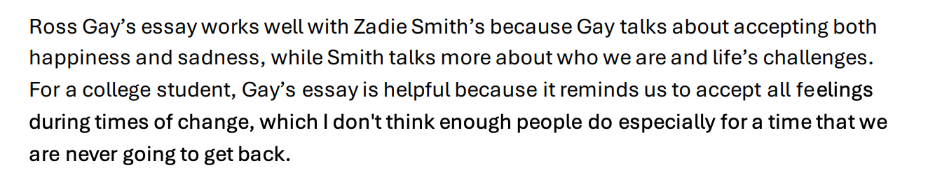
In a recent response where I was responding to “Ross Gay, “The First Incitement” Reading Response,” I generated this response below, and it’s around the same size as my first response, but you can tell the quality is way better. I give the first sentence sharing my main ideas, and then the rest of the response responds to the question asked.
Over the first few weeks, my approach to annotation has changed a lot. Initially, notes were unorganized and confusing, making it hard to use them later in my writing. For example, when annotating “The Hawk,” I would underline large sections and write quick, scattered notes in the margins. This method became frustrating because when I went back to rereading, I couldn’t easily understand what I had meant, and it slowed down my process of finding strong evidence or meaningful quotes. Now, my annotation system is much cleaner and more organized. This change has also influenced how I preview texts. Instead of diving straight into reading, I skim for main themes or arguments first. This helps me frame my reading better and connect my notes to bigger conversations in my writing, rather than just summarizing the content.
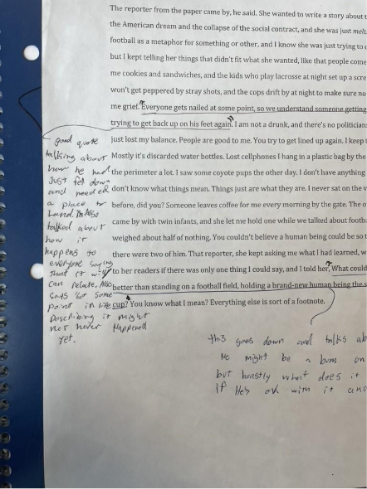
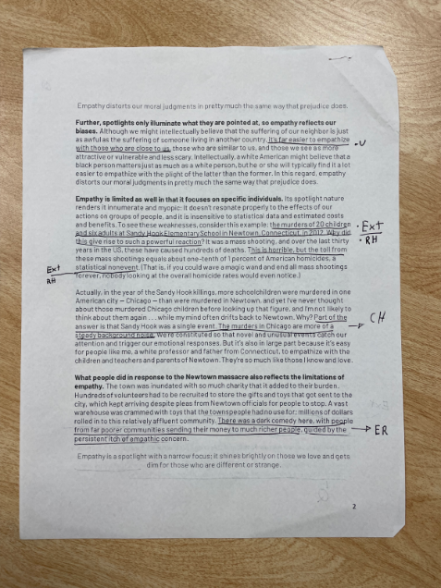
Overall, I can already see improvement in my annotation and previewing skills. With more practice and feedback, I’m confident I’ll continue to get better, which will help make my reading responses and essays stronger, clearer, and more connected to the larger ideas we discuss. Embracing this journey of refining my approach is helping me unlock my potential as a reader and writer.

Leave a Reply